
U.S. Stablecoin Rules May Trigger Global Liquidity Split, Comprehensive Report Finds
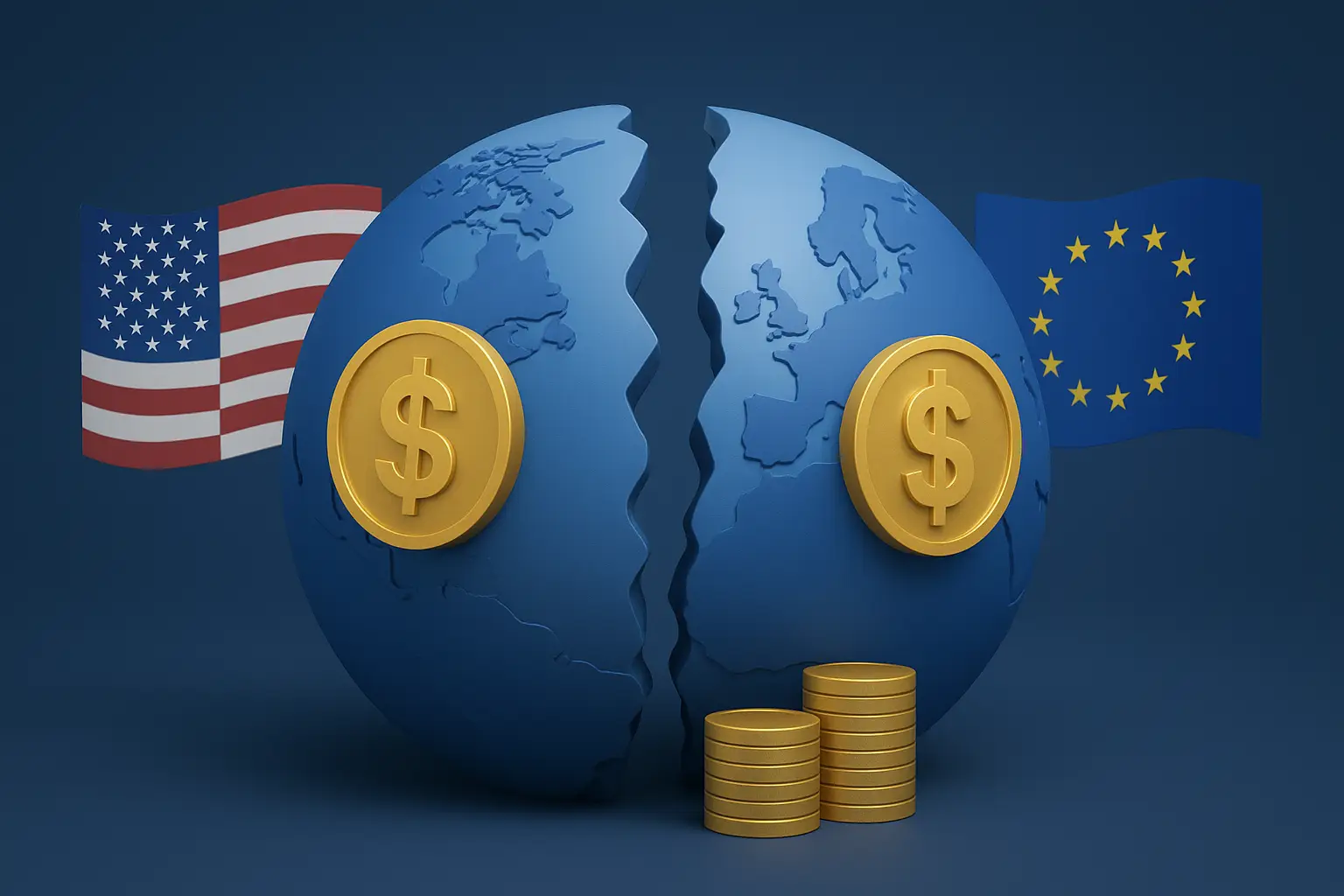
A new analysis from blockchain security firm CertiK warns that the United States’ upcoming stablecoin regulatory framework could cause a major divide in global digital asset liquidity, effectively separating the stablecoin markets of the U.S. and the European Union. The findings suggest that the world may be moving toward two distinct regulatory environments that could reshape the structure of the stablecoin industry for years to come.
At the center of this emerging split is the GENIUS Act, a wide-ranging U.S. stablecoin proposal designed to strengthen consumer protection and bring clarity to the digital asset space. The act introduces strict requirements for stablecoin issuers, including mandatory full reserve backing, limitations on who can issue stablecoins, and prohibitions on yield-bearing or interest-related products tied directly to the tokens. Issuers would also be required to comply with a rigorous licensing system, ensuring higher transparency and oversight.
While these measures aim to reinforce trust in the U.S. financial system, they contrast significantly with the regulatory architecture already in place within the European Union. Europe’s MiCA framework, which recently came into effect, outlines its own standards for stablecoin issuance, focusing on issuer accountability, consumer protection, and operational transparency. However, MiCA differs in several structural areas, including its handling of interest-bearing instruments and its approach to reserve management.
CertiK argues that the incompatibility between the two frameworks may create regional silos of stablecoin liquidity. Under this scenario, stablecoins compliant with U.S. laws would likely remain primarily within American exchanges, platforms, and institutions. In contrast, European-regulated stablecoins would circulate mostly within the EU’s digital finance ecosystem. This division could limit the global interoperability of stablecoins and challenge the long-standing assumption that digital assets should move freely and efficiently across borders.
The consequences of such a split could be far-reaching. Cross-border payment providers, crypto exchanges, and international fintech companies may face additional compliance burdens when managing transfers between U.S. and EU customers. They may need to maintain separate operational pipelines, liquidity pools, and risk-management structures for each jurisdiction. This would increase operational costs and potentially slow down transactions that once flowed seamlessly across regions.
Moreover, the divergence could reduce the ability of stablecoins to serve as unified global settlement tools — one of the primary reasons the industry adopted them in the first place. If liquidity becomes fragmented, users may experience inefficiencies such as longer settlement times, higher costs, and limited access to certain tokens depending on their region. Businesses that rely heavily on stablecoins for international operations may also reconsider how they structure cross-border financial flows.

The regulatory divergence between the United States and European Union around stablecoins. Source: CertiK
Experts note that the situation highlights a broader challenge within the digital asset sector: major global economies are creating rules at different speeds, with different priorities, and with limited coordination. Without harmonization or interoperability standards, the stablecoin market could evolve into a patchwork of regional systems rather than a single, cohesive global network.
CertiK’s report emphasizes that both the U.S. and the EU are pursuing regulatory clarity to protect consumers and stabilize the sector. However, the lack of alignment between their approaches may unintentionally reshape how stablecoins function worldwide. As the GENIUS Act progresses and MiCA enforcement continues to expand, the future of global stablecoin liquidity may depend on whether bridges can be built between the two regulatory worlds — or whether the divide will become the industry’s new normal.
Source: Cointelegraph Edited by Sonarx