
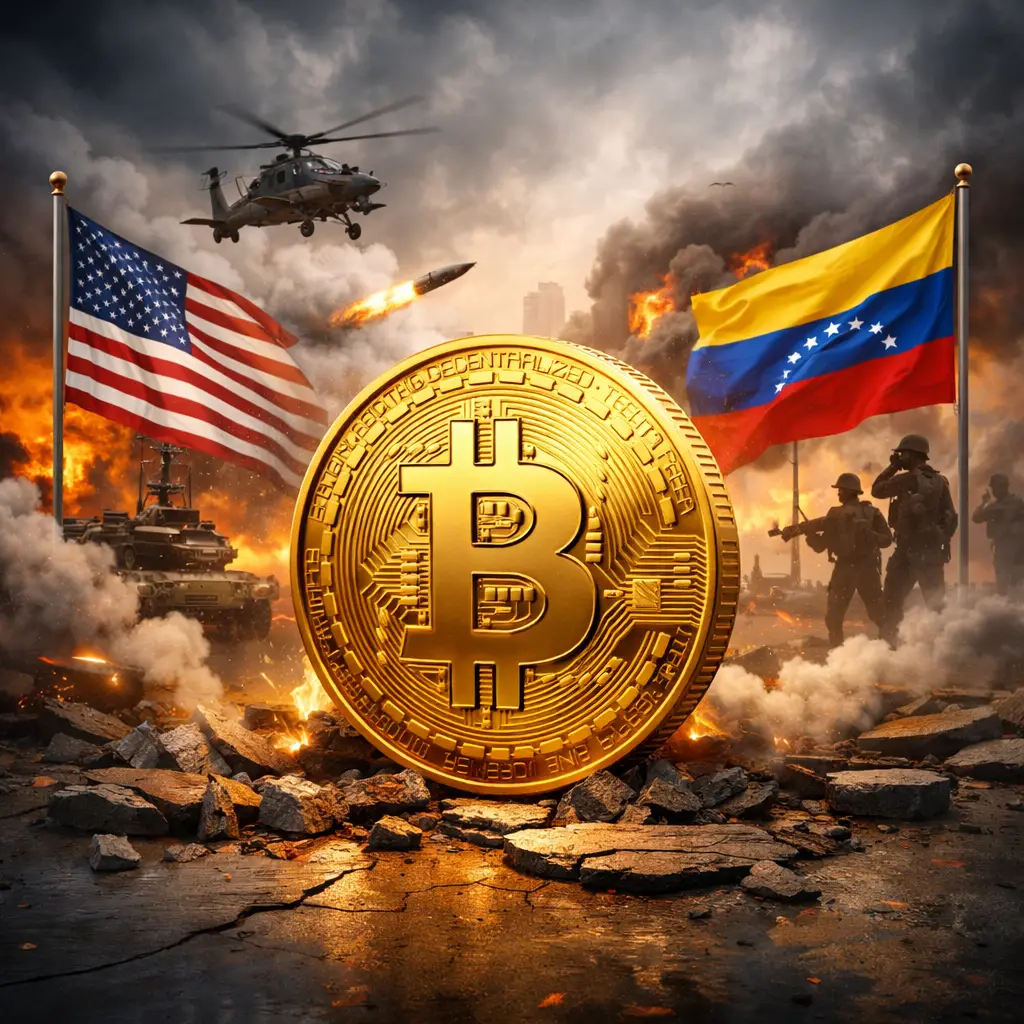
Bitcoin Remains Stable as U.S.–Venezuela Tensions Fail to Rattle Crypto Markets
Bitcoin held steady following a major geopolitical development involving the United States and Venezuela, defying expectations of a sharp sell-off and signaling growing resilience in the cryptocurrency market.
The situation escalated after the United States carried out a targeted military operation in Venezuela that resulted in the capture of the country’s president, Nicolás Maduro. The incident immediately raised concerns about potential market fallout, as geopolitical shocks have historically triggered heightened volatility across global financial assets.
Despite the severity of the news, Bitcoin experienced only a brief and limited price dip before stabilizing. Early trading saw the cryptocurrency slip slightly from recent levels, but buying interest quickly emerged, allowing prices to recover and remain within their established range. The lack of sustained selling pressure suggested that traders did not view the event as a catalyst for broader market disruption.
Market analysts noted that Bitcoin’s technical structure remained intact throughout the period of uncertainty. Key support levels held firm, and price action indicated continued confidence among market participants. Unlike previous geopolitical crises that resulted in abrupt liquidations, this episode produced contained volatility and orderly trading conditions.
One factor supporting price stability was the liquidation of leveraged bearish positions. Traders positioned for a steep decline were forced to close their positions as Bitcoin rebounded, contributing to upward price pressure and reducing the likelihood of further downside. This dynamic has become increasingly common in the current market cycle, where sharp sell-offs are often met with rapid counter-moves.
Analysts also pointed to the perception that the U.S. action was limited in scope rather than the beginning of a prolonged conflict. With no immediate signs of escalation or broader regional involvement, investors appeared unwilling to exit risk assets aggressively. Long-standing tensions between the two countries may have further reduced the element of surprise, allowing markets to absorb the news more calmly.
The broader cryptocurrency market mirrored Bitcoin’s stability. Major digital assets avoided significant losses, and overall market capitalization remained largely unchanged. Trading activity suggested that investors remain focused on macroeconomic conditions and long-term market trends rather than short-term geopolitical headlines.

Bitcoin’s price is up 4.19% over the past seven days. Source: CoinMarketCap
The episode adds to a growing body of evidence that Bitcoin is becoming less reactive to geopolitical shocks as market infrastructure, liquidity, and participant sophistication continue to improve. While uncertainty remains a constant factor in global markets, the restrained response highlights Bitcoin’s evolving role as a maturing financial asset.
Market observers cautioned that further geopolitical developments or unexpected escalation could still influence price action. However, based on current behavior, analysts broadly agree that the U.S.–Venezuela situation alone is unlikely to trigger a major correction in Bitcoin or the wider crypto market.
For now, Bitcoin’s ability to maintain stability amid heightened global tensions reinforces confidence among traders and investors, underscoring the asset’s increasing resilience in an unpredictable geopolitical environment.

The price of Bitcoin barely moved, despite the US attack on Venezuela, which dominated media headlines on Saturday. Source: TradingView
Source: Cointelegraph
Source: Cointelegraph
Edited by Sonarx