
The ongoing geopolitical tensions involving Iran have introduced a new layer of uncertainty into global financial markets, with Bitcoin emerging as one of the most closely watched assets during this period. As traditional markets react to rising energy prices, inflation concerns, and supply chain disruptions, analysts are increasingly divided on how the conflict will ultimately influence the trajectory of the world’s leading cryptocurrency.
In the early stages of the conflict, Bitcoin experienced a sharp sell-off, briefly dropping below key support levels as investors moved away from risk assets. This initial decline reflected a broader market reaction, where fear and uncertainty triggered widespread liquidation across equities, commodities, and digital assets.
However, the downturn proved to be short-lived. Bitcoin quickly stabilized and began to recover, climbing back into the $70,000 range as market sentiment improved. This rebound suggests that while geopolitical shocks can trigger immediate volatility, the cryptocurrency market has shown resilience in absorbing such events over time.
One key factor driving this recovery is the shifting perception of Bitcoin as a potential hedge against macroeconomic instability. With oil prices surging due to disruptions in critical supply routes such as the Strait of Hormuz, inflationary pressures have intensified globally. In such an environment, some investors are turning to Bitcoin as an alternative store of value, similar to gold, though its behavior remains less predictable.
At the same time, rising energy costs are creating structural challenges for the Bitcoin ecosystem itself. Mining operations, which rely heavily on electricity, are becoming increasingly expensive to maintain. In some cases, production costs are approaching or even exceeding market prices, forcing miners to scale back operations or pivot toward more profitable ventures like artificial intelligence infrastructure.
Market experts are now presenting a wide range of possible scenarios for Bitcoin’s future price direction. In a bullish outlook, prolonged geopolitical instability could prompt central banks—particularly the U.S. Federal Reserve—to adopt more accommodative monetary policies. Increased liquidity and potential money printing could, in turn, drive demand for Bitcoin and push prices significantly higher over the long term.
On the other hand, a more cautious view suggests that continued uncertainty may suppress investor appetite for risk assets, including cryptocurrencies. If global markets remain volatile and interest rates stay elevated, Bitcoin could face downward pressure despite its recent resilience. Analysts note that its performance during the conflict has been mixed, with periods of both strong gains and notable pullbacks.
Interestingly, Bitcoin’s behavior during this conflict has mirrored patterns observed in previous geopolitical crises. Prices tend to drop sharply at the onset of major events but recover as markets adjust and uncertainty becomes priced in. Over time, this has led to a gradual stabilization, with smaller drawdowns occurring after each escalation.
Looking ahead, the duration and intensity of the Iran conflict will likely play a decisive role in shaping Bitcoin’s price trajectory. A prolonged crisis could reinforce its narrative as a hedge against economic instability, while a swift resolution may shift investor focus back to traditional markets and risk-on assets.
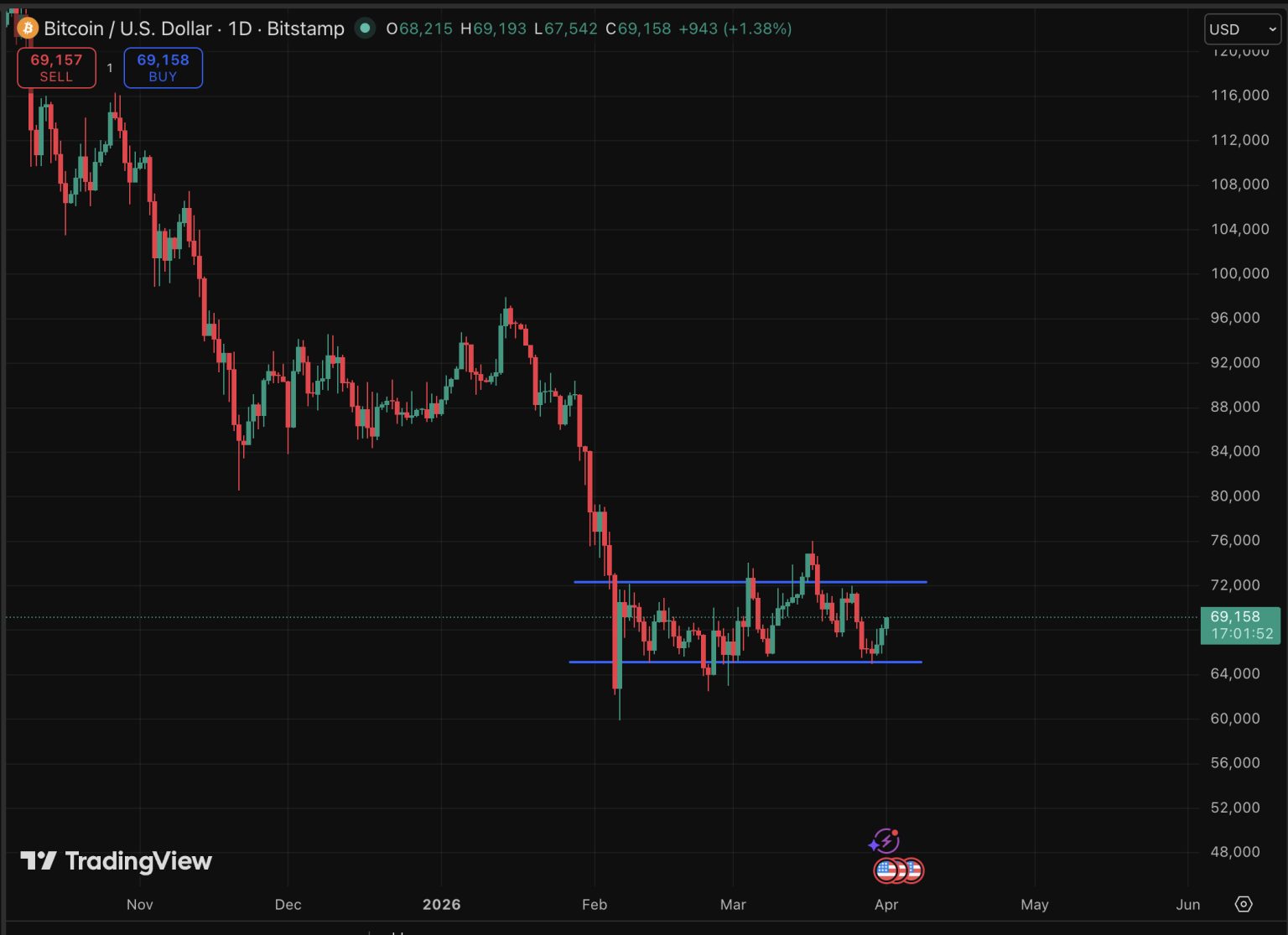
BTC USD, TradingView
Ultimately, Bitcoin remains highly sensitive to macroeconomic signals, and its future path will depend on a complex interplay of geopolitical developments, monetary policy decisions, and investor sentiment. While predictions vary widely—from significant declines to substantial long-term gains—the current environment underscores one consistent theme: volatility is likely to remain a defining characteristic of the cryptocurrency market in the months ahead.
Source: Cryptonews Edited by Sonarx