

Ethereum has remained under sustained selling pressure, raising concerns among market participants that the price could extend its current decline. After failing to hold above important psychological and technical levels, the asset recently slipped below the $3,000 threshold, signaling weakening market confidence. The move places Ethereum significantly below its yearly highs and reinforces the broader bearish sentiment dominating the market.
Technical analysis suggests that Ethereum’s price structure continues to favor the downside. Several indicators point to reduced buying momentum, including declining trading volumes and the formation of bearish continuation patterns on higher timeframes. These signals imply that the current correction may not yet be complete, increasing the possibility of a further drop toward the $2,500 region if selling pressure persists.
A major factor contributing to the downturn is continued distribution by large market participants. Notably, sustained sell-side activity linked to Wintermute has added to market supply, limiting Ethereum’s ability to recover during short-term relief rallies. Such persistent selling from institutional or high-volume traders often weighs heavily on price action, especially during periods of low market liquidity.
On the derivatives side, market data reflects growing caution among traders. Open interest in Ethereum futures has declined, suggesting that traders are closing leveraged positions rather than opening new ones. This behavior typically signals reduced confidence in near-term upside and aligns with a risk-off sentiment across the broader crypto market. Additionally, spot market demand has softened, with reduced inflows indicating hesitation among investors.
Despite the short-term bearish outlook, some analysts emphasize that Ethereum’s long-term fundamentals remain intact. Ongoing network upgrades, strong developer activity, and its dominant role in decentralized finance and smart contract infrastructure continue to support its broader value proposition. However, these factors may take time to influence price action if macroeconomic uncertainty and market-wide risk aversion remain elevated.
In the near term, analysts warn that a failure to reclaim key resistance levels could accelerate downside movement. If Ethereum loses additional support, the $2,500 zone is widely viewed as the next major area where buyers may attempt to re-enter the market. Until clearer signs of accumulation or trend reversal emerge, volatility is expected to remain high.
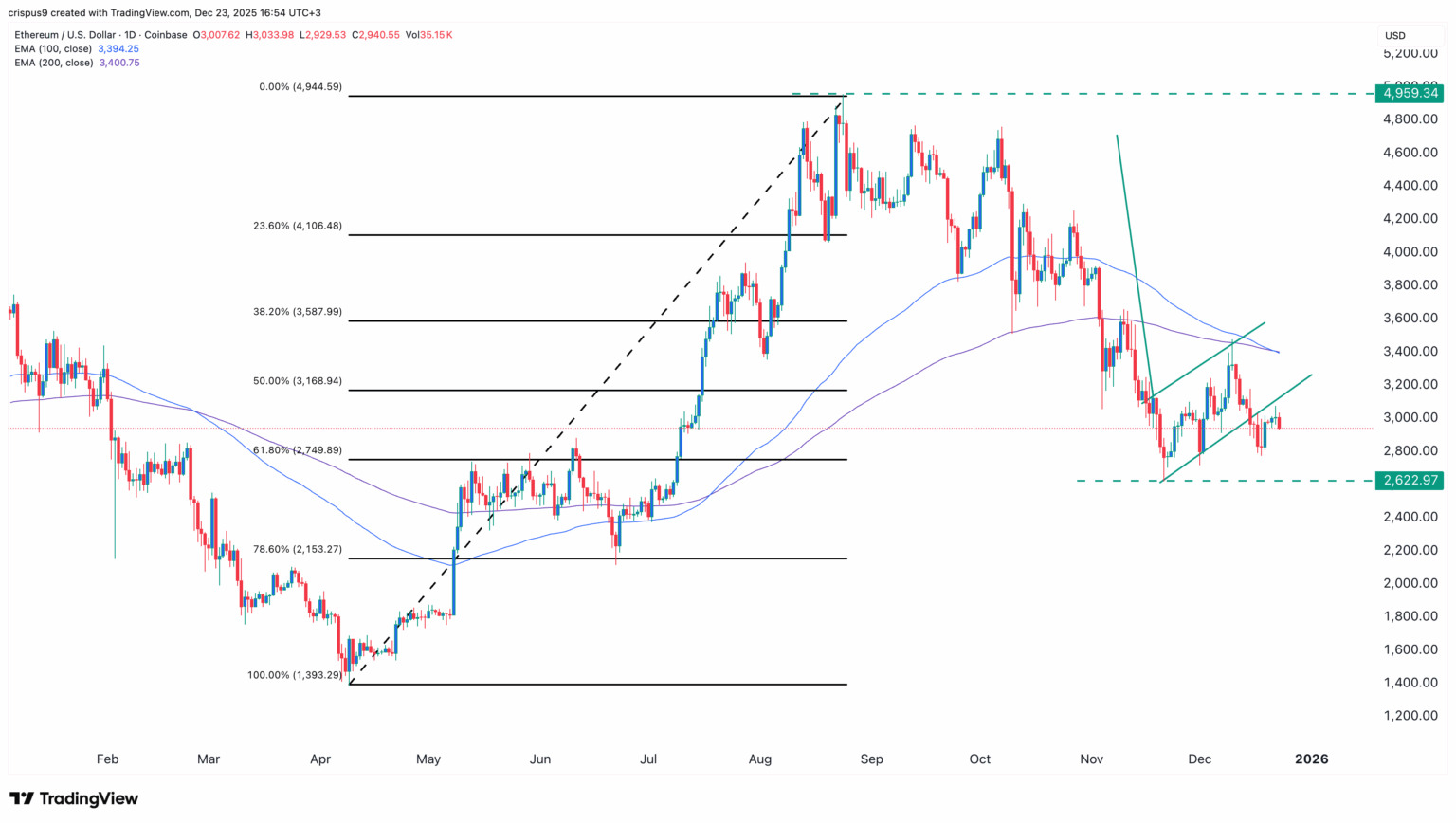
Ethereum Price Chart
Overall, Ethereum’s price action reflects a market caught between strong long-term fundamentals and short-term technical weakness. Traders and investors are closely monitoring whether selling pressure eases or intensifies, as this will likely determine the asset’s direction in the coming weeks.
Source: Coingape Edited by Sonarx